
Mandy is an absolutely excellent guide to all of the birds of Hawaii. Our birding tour booked with Hawaii Bird Tours for 10 days. Mandy made sure each of us got a look at the birds that appeared. Mandy knows many of the birds as individuals, which testifies to her dedication to protecting and loving what she does. She is very respectful of the environment and of the relationships each native bird species has with its habitat. Mandy is highly respected and active in the local environmental and conservation groups, a fact that gave us unique insights to the dynamics in birding in the Hawaiian islands. We felt honored to have access to remote regions and to experience the birds in their native habitats.
I cannot sing enough praises of Mandy who in addition to being a superb birding guide, is a kind and thoughtful person. This was an unforgettable tour.
Birding Paradise on Hawai‘i’s Big Island


Experience the best of Hawaiʻi and its beautiful birds with local experts on our favorite island!
The Big Island is where most of our endemic birds are still found, with seven species of honeycreepers (five endemic to the island itself), our state bird, the Nēnē, its own species of endemic thrush, its own monarch flycatcher, and the only island with the Hawaiian Hawk, in addition to offering most of Hawaiʻi’s calmest ocean conditions.
We invite you to join us on the best birding experience the Big Island has to offer, featuring access to Hakalau Forest NWR, remote transects of subalpine forest in search of the critically endangered Palila, and our unrivaled pelagic birding adventures as Hawaiʻi’s only exclusive bird tour operator.
Why Choose This Tour?
Click the tabs below to find out more...
Trip Details
Price
Group tour: $1795 per person plus tax
Add-Ons (All Dates)
Add-Ons:
- Lodging at Royal Kona Resort with transportation to and from tour meeting points
- Extension to Volcanoes National Park with a local expert (offerings based on availability)
Availability
- May 10 -14, 2027
- September 20 -24, 2027
- October 12 -16, 2027
Duration
5 Days
Group size
Maximum 8 on the trail / custom 12 passenger off-roading tour van and 17 guests on 46′ custom Delta boat
Included
- Park entrances and fees
- Lunches and snacks on tour
- Transportation from tour meeting points to bird tour locations
- Expert guiding
- Boat crew gratuity
- Online checklists
Not included
- Transportation to tour meeting points, unless you purchase lodging at Royal Kona Resort with our ‘add on’
- Guide Gratuity
What to bring
- Lightweight long pants
- Lightweight sweater/ fleece
- Camera
- Binoculars
- Sun protection
- Quick dry layered clothing
- Raincgear
- Closed-toed, comfortable shoes with good grip and support
- A refillable water bottle
- Motion sickness prevention medication
Participation Requirements
You must be prepared to walk 1 -2 miles on uneven and often muddy terrain, stand for long periods of time, and steadily balance yourself on a moving boat. Walking sticks and foldable stools are recommended for those with difficulty standing and walking for several hours at a time
About your guide
Mandy has been pioneering pelagic birding in Hawaiʻi for over the past 10 years and is honored to team up with a local captain and crew, during which they’ve previously encountered White-necked Petrel, Kermadec Petrel, and Christmas Shearwater.
Trip Itinerary
DAY 1
Kona Pelagic Birding Adventure 1 of 3
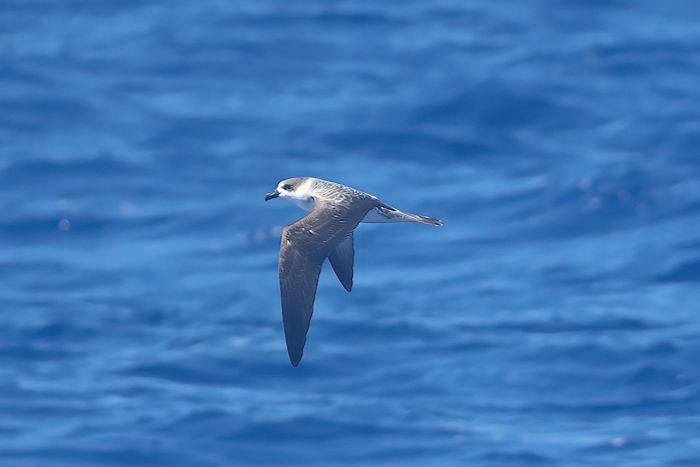
Mandy has been pioneering pelagic birding in Hawaii for over the past 10 years and is honored to team up with a local captain and crew when they seasonally encounter sought-after pelagic migrants and critically endangered endemic seabirds.
Our resident species include Wedge-tailed Shearwater, Red-footed Booby, Brown Booby, Masked Booby, Brown Noddy, Black Noddy (melanogenys subspecies), Sooty Tern, Blue-billed White Tern, Great Frigatebird, and White-tailed Tropicbird. Black-footed Albatross, Laysan Albatross, and Red-tailed Tropicbirds are possible, but they breed on other Hawaiian islands and usually travel north to feed. Our endangered endemic Newell’s Shearwater and Hawaiian Petrel are always possible, becoming more likely in Spring and Fall when our pelagic migrants are on the move. Migrants and nearby sought-after breeders include Leach’s Storm-Petrel, Bulwer’s Petrel, Black-winged Petrel, Mottled Petrel, Cook’s Petrel, Juan Fernandez Petrel, White-necked Petrel, Kermadec Petrel, Christmas Shearwater, Sooty Shearwater, Short-tailed Shearwater, Buller’s Shearwater, South Polar Skua, Pomarine Jaeger, Parasitic Jaeger, Long-tailed Jaeger, and Arctic Tern, with hopes of more rarities like Streaked Shearwater, Gray-backed Tern, and Blue-gray Noddy. We are also very excited about our potential dolphin and whale encounters which have previously included Hawaiian Spinner Dolphin, Pantropical Spotted Dolphin, Bottlenose Dolphin, Rough-toothed Dolphin, Fraser’s Dolphin, Short-finned Pilot Whale, Melon-headed Whale, Pygmy Killer Whale, False Killer Whale, Blainville Beaked Whale, Cuvier’s Beaked Whale, Sperm Whale, and North Pacific Humpback Whale. Again, we are trail blazing pelagic birding in Hawaiʻi and continually learning more about these spectacular seabirds and cetaceans.
DAY 2
Birding Big Island’s Leeward Side
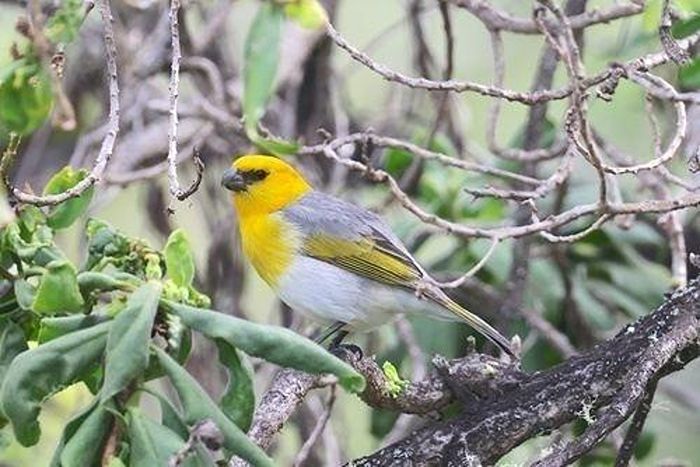
We begin our day on a quest for Hawaiʻi ʻElepaio and Hawaiʻi ʻAmakihi, with hopes of finding Hawaiian Hawk and one of the last critically endangered Palila. (Palila returned to an accessible area ~7,000′ above sea level for the first time in over 4 years in Spring 2026; (after over 4 years of unsuccessful searches) their population plummeted from over 1,000 individuals to less than 350 individuals). On our way to the sub-alpine dry forests of māmane, ‘iliahi, and naio at elevations of 7,000’ -9,000’ above sea level, we will bird Saddle Road for Short-eared Owl (endemic subspecies), Eurasian Skylark, Chukar, California Quail, Wild Turkey, Ring-necked Pheasant, Erckel’s, Spurfowl, Black and Gray francolins, Japanese Bush Warbler, Nēnē (Hawaiian Goose) and more. From the high elevations of Pu`u La`au along the slopes of Mauna Kea, we will drive through Waikoloa for a quick lunch stop and search of more introduced species, like Chestnut-bellied Sandgrouse, Red Avadavat, Warbling White-eye, Yellow-billed Cardinal, Yellow-fronted Canary, African Silverbill, and more.
DAY 3
Kona Pelagic Birding Adventure 2 of 3
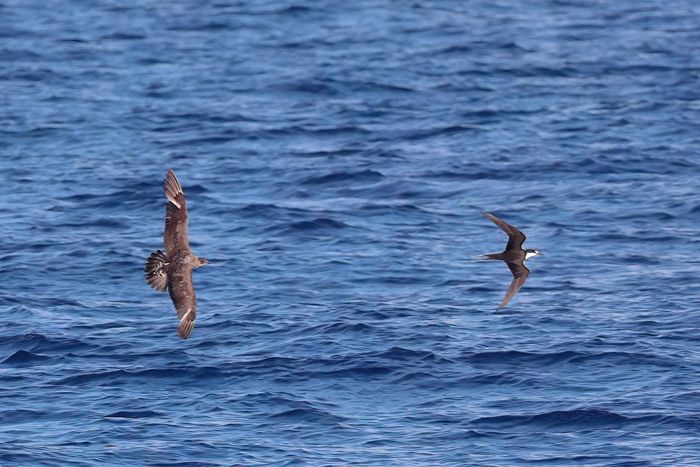
Mandy has been pioneering pelagic birding in Hawaii for over the past 10 years and is honored to team up with a local captain and crew when they seasonally encounter sought-after pelagic migrants and critically endangered endemic seabirds.
Our resident species include Wedge-tailed Shearwater, Red-footed Booby, Brown Booby, Masked Booby, Brown Noddy, Black Noddy (melanogenys subspecies), Sooty Tern, Blue-billed White Tern, Great Frigatebird, and White-tailed Tropicbird. Black-footed Albatross, Laysan Albatross, and Red-tailed Tropicbirds are possible, but they breed on other Hawaiian islands and usually travel north to feed. Our endangered endemic Newell’s Shearwater and Hawaiian Petrel are always possible, becoming more likely in Spring and Fall when our pelagic migrants are on the move. Migrants and nearby sought-after breeders include Leach’s Storm-Petrel, Bulwer’s Petrel, Black-winged Petrel, Mottled Petrel, Cook’s Petrel, Juan Fernandez Petrel, White-necked Petrel, Kermadec Petrel, Christmas Shearwater, Sooty Shearwater, Short-tailed Shearwater, Buller’s Shearwater, South Polar Skua, Pomarine Jaeger, Parasitic Jaeger, Long-tailed Jaeger, and Arctic Tern, with hopes of more rarities like Streaked Shearwater, Gray-backed Tern, and Blue-gray Noddy. We are also very excited about our potential dolphin and whale encounters which have previously included Hawaiian Spinner Dolphin, Pantropical Spotted Dolphin, Bottlenose Dolphin, Rough-toothed Dolphin, Fraser’s Dolphin, Short-finned Pilot Whale, Melon-headed Whale, Pygmy Killer Whale, False Killer Whale, Blainville Beaked Whale, Cuvier’s Beaked Whale, Sperm Whale, and North Pacific Humpback Whale. Again, we are trail blazing pelagic birding in Hawaiʻi and continually learning more about these spectacular seabirds and cetaceans.
DAY 4
Birding Hakalau Forest NWR
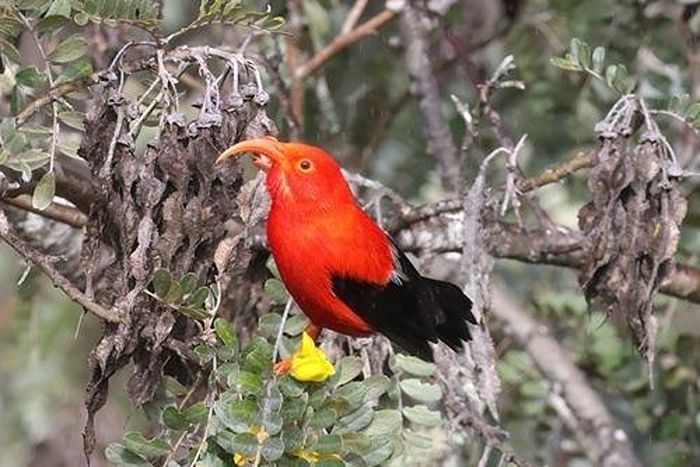
Experience Hakalau aka Hawaiʻi’s honeycreeper heaven! Hakalau Forest NWR is a publicly restricted montane cloud forest refuge and is home to many of Hawaiʻi’s endangered plants, native arthropods, and endemic birds. We will search for the unique Hawaiʻi ‘Alawī (creeper), the gorgeous day glow orange Hawaiʻi ʻAkepa, the stunning long billed ʻAkiapōlāʻau, the ʻIo (Hawaiian Hawk), Hawaiʻi ʻElepaio, and ʻŌmaʻo (HawaiʻiIsland’s endemic thrush) with beautiful I’iwi, Hawaiʻi ʻAmakihi, and ʻApapane all over the blossoms of ancient ‘Ohi’a trees enshrouding us. We will obviously be birding our way all the way in and out of the refuge for any target species we haven’t already tracked down on land, but today we easily be one of the highlights of the week, despite off-roading for an hour in and out of the refuge.
DAY 5
Kona Pelagic Birding Adventure 3 of 3
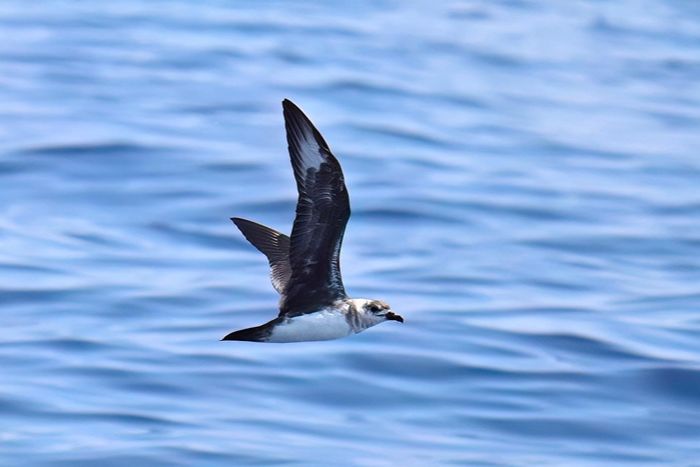
Mandy has been pioneering pelagic birding in Hawaii for over the past 10 years and is honored to team up with a local captain and crew when they seasonally encounter sought-after pelagic migrants and critically endangered endemic seabirds.
Our resident species include Wedge-tailed Shearwater, Red-footed Booby, Brown Booby, Masked Booby, Brown Noddy, Black Noddy (melanogenys subspecies), Sooty Tern, Blue-billed White Tern, Great Frigatebird, and White-tailed Tropicbird. Black-footed Albatross, Laysan Albatross, and Red-tailed Tropicbirds are possible, but they breed on other Hawaiian islands and usually travel north to feed. Our endangered endemic Newell’s Shearwater and Hawaiian Petrel are always possible, becoming more likely in Spring and Fall when our pelagic migrants are on the move. Migrants and nearby sought-after breeders include Leach’s Storm-Petrel, Bulwer’s Petrel, Black-winged Petrel, Mottled Petrel, Cook’s Petrel, Juan Fernandez Petrel, White-necked Petrel, Kermadec Petrel, Christmas Shearwater, Sooty Shearwater, Short-tailed Shearwater, Buller’s Shearwater, South Polar Skua, Pomarine Jaeger, Parasitic Jaeger, Long-tailed Jaeger, and Arctic Tern, with hopes of more rarities like Streaked Shearwater, Gray-backed Tern, and Blue-gray Noddy. We are also very excited about our potential dolphin and whale encounters which have previously included Hawaiian Spinner Dolphin, Pantropical Spotted Dolphin, Bottlenose Dolphin, Rough-toothed Dolphin, Fraser’s Dolphin, Short-finned Pilot Whale, Melon-headed Whale, Pygmy Killer Whale, False Killer Whale, Blainville Beaked Whale, Cuvier’s Beaked Whale, Sperm Whale, and North Pacific Humpback Whale. Again, we are trail blazing pelagic birding in Hawaiʻi and continually learning more about these spectacular seabirds and cetaceans.
Target Species List
Important Info
Read Why People Love Us
My trip with Hawaii Bird Tours was worth every penny and far exceeded all expectations!
Mandy is a phenomenal birder, naturalist, guide, and host. Her knowledge of Hawaiian ecology and her care for both birds and wildlife is apparent and contagious. I learned a wealth of knowledge while spending 10 days with Mandy across Oahu, Kauai, and Big Island. The 10 day, all-inclusive multi-island tour was a once-in-a-lifetime adventure and I’m incredibly grateful for the experience!
Mandy deserves all the praise in the world for her efforts to educate and inspire visiting birders about the conservation challenges and natural beauty of the Hawaiian islands. Booking with Hawaii Bird Tours is an absolute must for any birders visiting Hawaii!
I loved my birding in Hawaii with Mandy. I highly recommend her guided birding tours. Mandy found us the local specialties across the three islands we visited without rushing or stressing over logistics. I appreciate her local knowledge and her ability to put the birds and environment in context. It is encouraging to see the efforts being invested to preserve and improve sensitive Hawaii habitats. Seeing the results, in terms of wild spaces and the birds that thrive there, was a great counterweight to understanding how and why some species will not continue to survive in the wild. I was on the April 10-19, 2023 “Hawaii’s Best Birding Tour: Endemics to Palagics” with a fun group of birders. Thank you, Mandy, for making it a great experience.
Mandy just dropped us off after a wonderful day of birding in Hakalau on the Big Island. She is a superb birder and guide. Our group was not a high level birding group but she patiently lead us to all but one of the target rare native Hawaiian birds. Her knowledge is extensive about all things Hawaiian – geology, native species, and history. She has traveled extensively to bird watch and brings much knowledge of many bird species into our discussions. Mandy is more than a great guide for bird watching – she covers all the unappreciated things – patience with needed stops, food, any request – all with good humor. She is passionate about Hakalau – a rare corner of Hawaii most people never see. Hurry if you want to see the few remaining beautiful birds on the island


